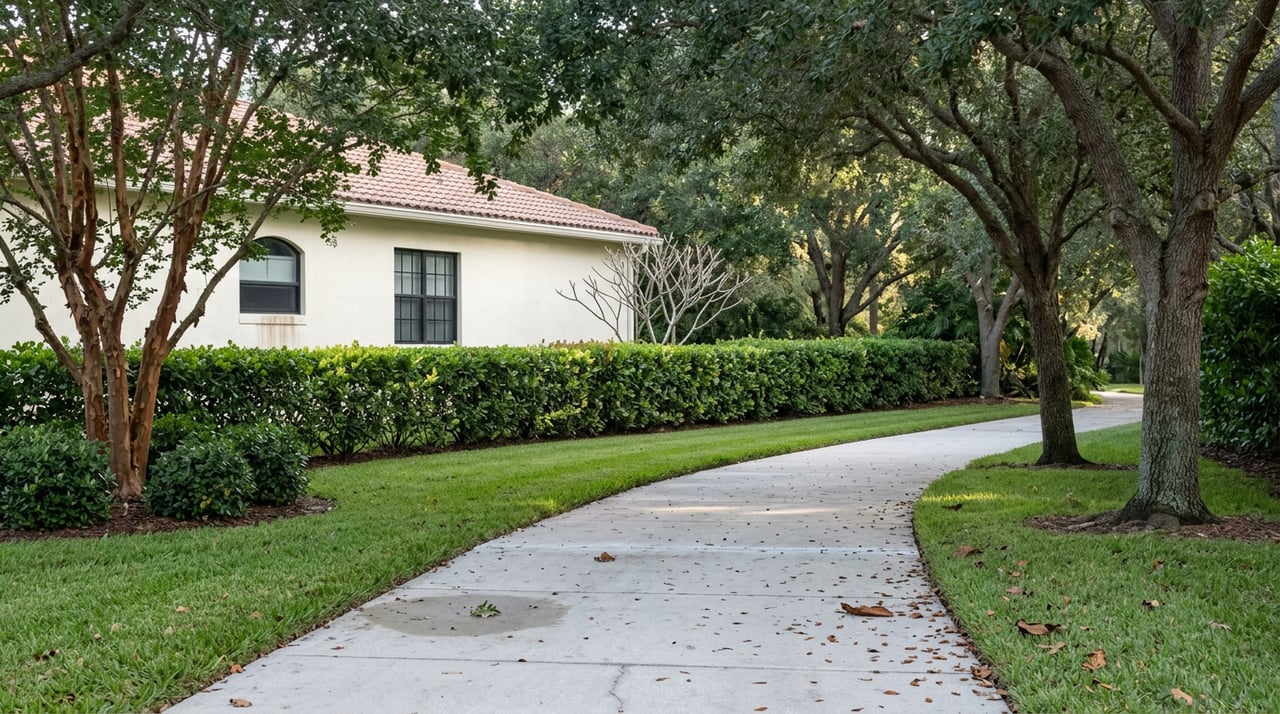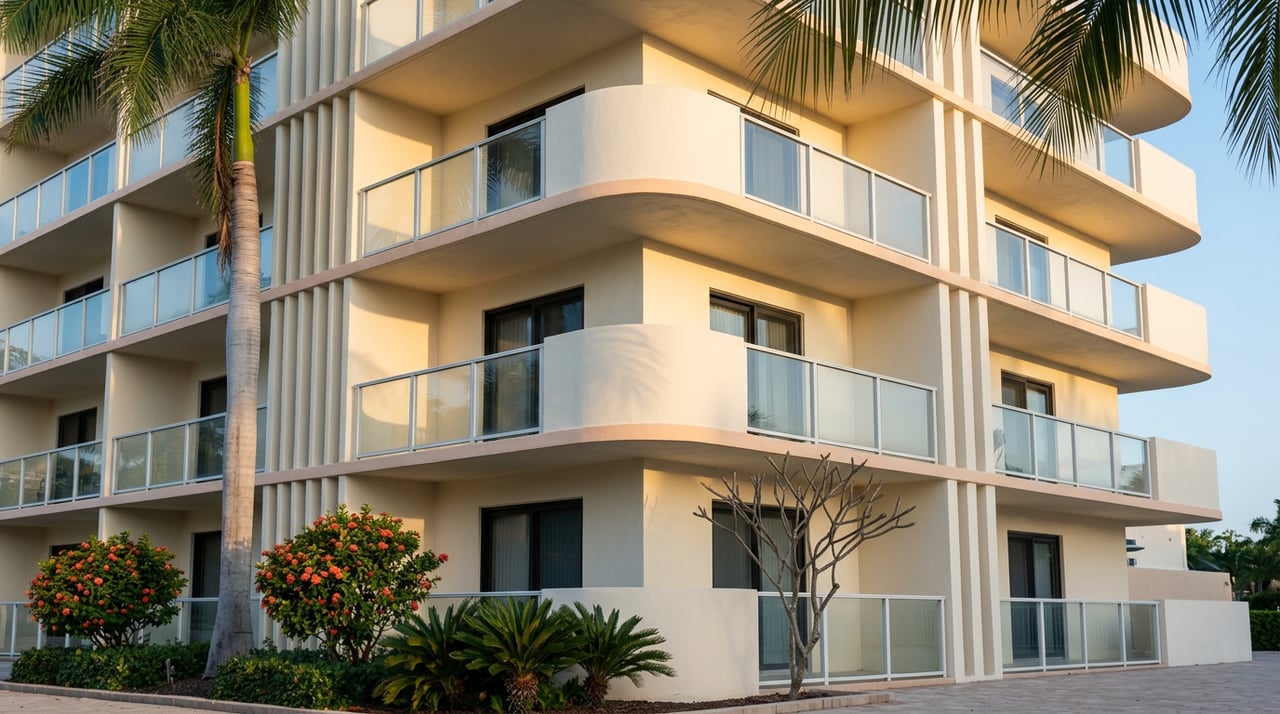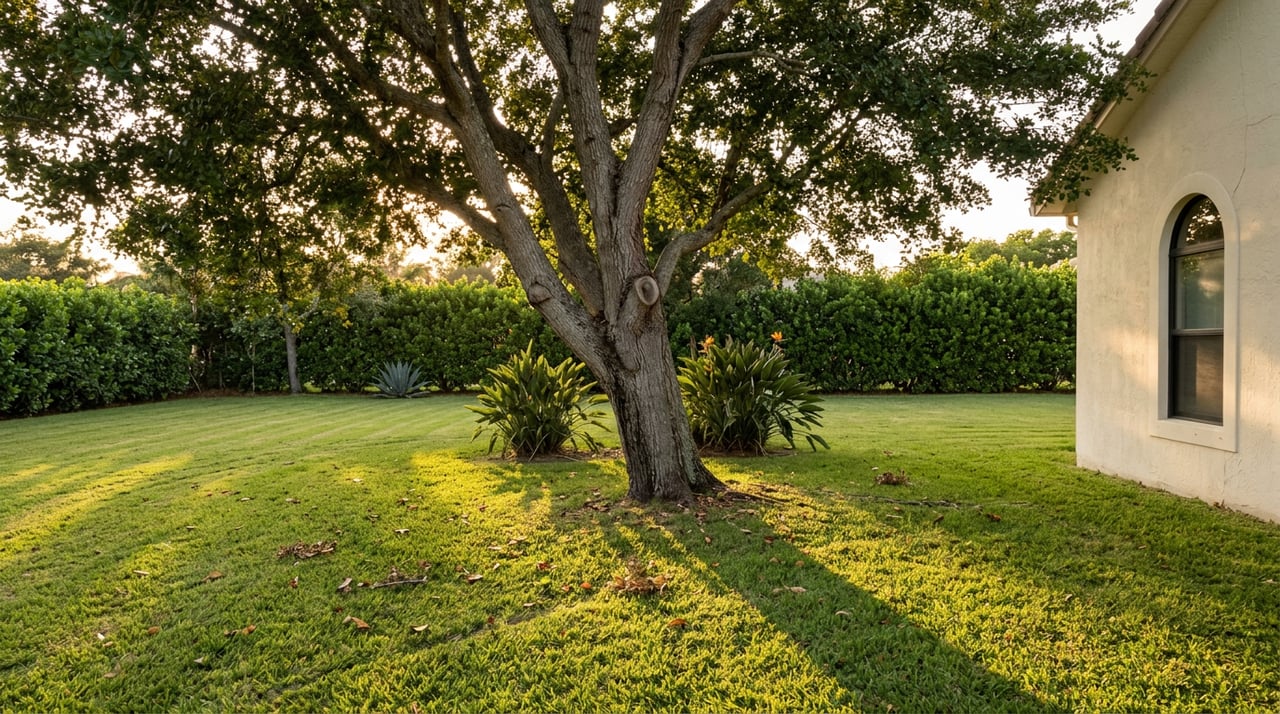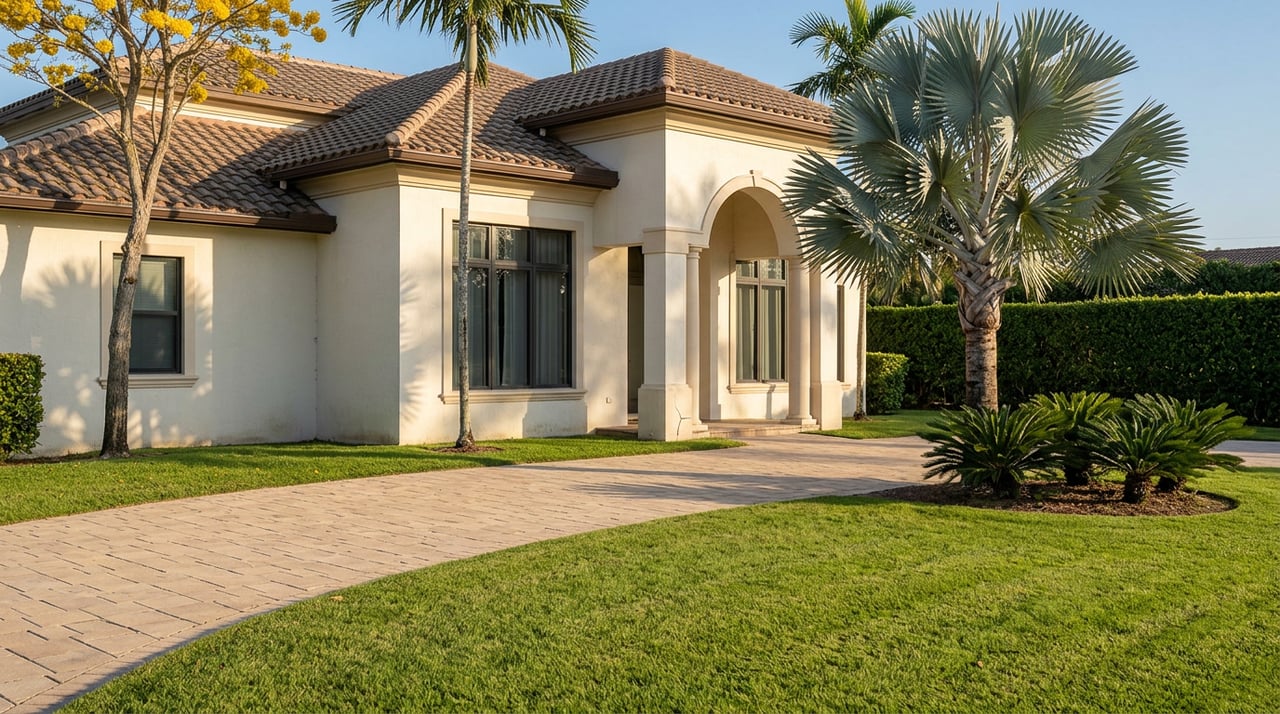
In late August 2026, two homes went under contract in Pinecrest within the same weekly reporting window. One is an 11,700-square-foot spec mansion at 6290 Chapman Field Drive in Bay Ridge Estates, built on a 1.1-acre lot, eight bedrooms, ten full baths, a pool and a sky terrace, and it locked in its full $16.3 million ask. The entity that built it bought the land under it for $1.3 million in 2023. The other is a 6,800-square-foot house at 6060 Southwest 118th Street, built in 2023, seven bedrooms, a pool, a private tennis court, asking $9.6 million, or $1,400 per square foot. The couple who owns it paid $1.1 million for the property in 2020.
Run the math on either one and you get the same shape: land bought for a little over a million dollars, a finished house sold years later for many times that, nearly nine times the land price on Southwest 118th Street and more than twelve times it on Chapman Field Drive. If you're comparing Pinecrest to another Miami-Dade neighborhood right now, using a single median price to make that comparison, these two sales are the reason that number is going to mislead you.
The acre was fixed before either house was built
Pinecrest is not a subdivision inside a bigger city. It's its own incorporated village, 7.54 square miles, and it became one on March 12, 1996, when residents organized after Hurricane Andrew tore through the area in August 1992 and decided that decisions about their zoning and permitting were being made too far away. Incorporation gave the village its own council and its own land development code, and the headline of that code is a zoning district called EU-1, which sets a one-acre minimum lot for a single-family home. Miami-Dade's own zoning office confirms the standard: an EU-1 lot allows a house, a pool, and customary accessory structures, but caps lot coverage at 15 percent of the site, which is a large part of why even a brand-new estate on one of these lots still leaves most of the acre as yard.
That single rule, written into the village's own charter in 1996, is why Pinecrest can never generate more inventory than the land already allows. The ranch houses that first went up on these acre lots in the 1950s and 1960s established the pattern. Incorporation turned it into permanent code that a county commission balancing an entire metro area can't override. The number of one-acre parcels in Pinecrest is close to the number it will ever be.
What that fixed supply does to the price you see online
Here is where the two 2026 sales matter. Both are new construction on lots that, a few years ago, held nothing more than a piece of dirt with a modest price tag attached. Once you understand that the acre is capped and can't be replaced, the price a buyer pays stops being one number and starts being two: what the land is worth on its own, and what someone chose to build on top of it. Those two numbers move independently, and a village-wide median blends them together as if they were describing the same thing.
Look at what that blending does to the actual figures. As of August 2026, active single-family listings in Pinecrest carried a median list price of $4.75 million and $948 per square foot, with 22 of those listings asking $10 million or more. Over the trailing twelve months ending in March 2026, however, the median price for single-family homes that actually closed came in at $2.535 million, down 6 percent year over year across 251 sales. That's not a typo and it's not two sources disagreeing with each other. It's the same market, viewed two different ways: what's currently for sale skews toward finished, new-construction product asking aspirational prices, while what closes over a full year still includes a much larger share of the original ranch stock trading closer to land value.
| Market slice | Time window | Median price |
|---|---|---|
| Active single-family listings | August 2026 | $4.75 million |
| Closed single-family sales (trailing 12 months) | April 2025 to March 2026 | $2.535 million |
| New-construction closed sales only | Six-month sample ending March 2026 | $7 million |
That third row is the piece that ties it together. In a six-month sample of closed MLS sales ending in March 2026, new-construction homes in Pinecrest, built 2020 or later, posted a median price of $7 million and sold for roughly 30 percent more per square foot than the village's blended average. Strip out the already-renovated comps and compare strictly against untouched original stock, and that gap widens further. New construction also tends to sit longer before it sells. Single-family luxury contracts across Miami-Dade during the same recent reporting window averaged 108 days on market, which tracks with what you'd expect from a product that's asking a premium and waiting for the right buyer, rather than moving at land-value speed.
Put it together and the mechanism is straightforward: the acre supply can't grow, so every finished new build competes for a shrinking pool of lots, gets priced closer to what the market will bear for a completed product, and then sits on the active-listings side of the ledger longer while it waits to sell. Meanwhile the ranch houses, priced closer to raw land value, tend to close faster and pull the trailing closed-sales median down. Neither number is wrong. They're measuring different halves of the same village.
Deciding which side of the acre you're bidding on
If you're weighing a Pinecrest purchase against a home in a neighboring area, the median isn't the useful question. The useful question is which side of this split a specific listing sits on, and what that means for your budget. A few things worth checking before you tour:
- Ask when the structure was actually built, not just when it was last updated. A 2023 build and a renovated 1970s ranch can carry similar square footage and look similar in photos, but they're priced off entirely different baselines.
- Ask what the lot itself last traded for, if that record is available. The Chapman Field Drive and Southwest 118th Street sales both show land purchased years earlier for a fraction of the finished asking price, and that gap is the clearest read on how much of the current number is land versus structure.
- If you're considering an older acre lot as a renovate-or-rebuild project, price both paths before you commit. Custom construction on a Pinecrest lot is commonly quoted in the $350 to $700 per square foot range, and that number changes the renovate-versus-rebuild math considerably once you're past the cosmetic layer.
- Confirm the zoning designation on the specific parcel, since EU-1 isn't the only category in the village. Some sections carry different minimum lot requirements, and the county's zoning district page is the place to check before you assume a lot's buildable footprint.
A couple of questions worth asking directly
Does the Pinecrest median tell me what I'll actually pay? Not on its own. It tells you the blended midpoint of a market that includes both land-value ranch resales and finished new construction. Ask for the comparable sales on the specific type of product you're looking at, not the village-wide figure.
Is the land worth more than the house? In Pinecrest, that's frequently the more useful framing than asking what a house is "worth." The two 2026 sales above both started as land purchases in the low seven figures. What happened afterward, the design, the build, the finishes, is where the rest of the price came from, and it's the variable a buyer or seller has the most control over.
Pinecrest rewards buyers and sellers who understand which of these two markets they're actually in before they write an offer or set an asking price. If you're weighing a Pinecrest acre against another Miami-Dade neighborhood, or trying to figure out whether a specific lot is priced for its land or its structure, Phillip Delgado has spent 25 years reading these blocks one at a time. Let's talk about your next move.