What actually stalls a sale in Pinecrest two weeks before closing? Ask an agent who has closed a few dozen deals here and the answer is rarely the roof or the plumbing. It is the landscaping. Specifically, it is a tree that came down, or got trimmed hard, sometime during the seller's ownership without anyone pulling a permit first.
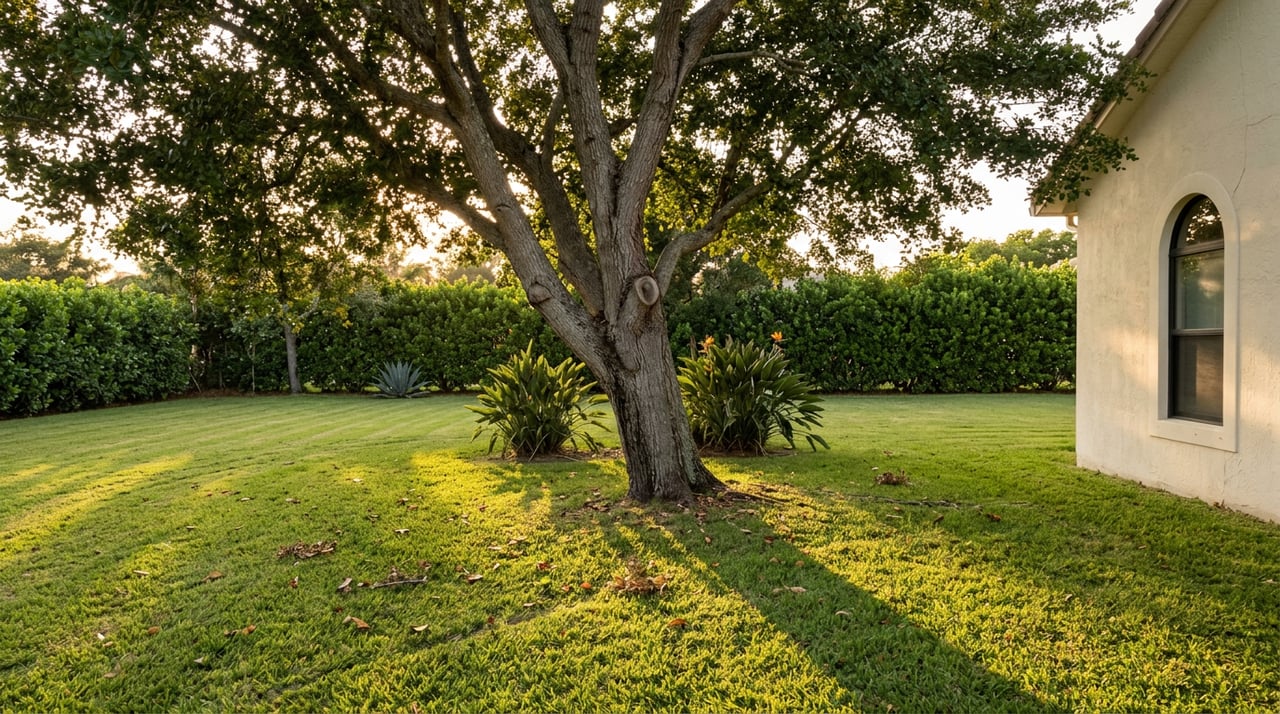
That sounds like a small thing in a market where homes routinely sell for well over a million dollars. It is not. Pinecrest is built on acre and half-acre lots under a canopy of oak, banyan, and mature palm that the Village treats as a protected asset, not decoration. The same lot size and tree cover that make Pinecrest listings desirable are exactly what generate more landscaping permits, more landscaping contractors working without permits, and more surprises that surface right when a title company or a buyer's inspector starts asking questions.
The rule sounds simple until you read three sources
The Village of Pinecrest defines a "specimen tree" as one with a trunk diameter over 18 inches measured four feet above the ground, and its own tree removal application states plainly that a permit is required for the removal or relocation of any tree or palm on a property, not just specimen-sized ones. That is the baseline most homeowners never actually read.
Ask a permit-expediting firm that works Pinecrest cases regularly and you will hear a different number: they describe the trigger as any tree over 6 inches in diameter. Ask Pinecrest Vice Mayor Shannon del Prado, who fields resident questions on tree rules every hurricane season, and you get a third answer: in residential areas, trimming does not require a permit at all. A permit is only required for pruning near US-1 or inside the Village's commercial districts, and residential trimming just has to follow ANSI tree-care standards to avoid a hat-racking violation, defined as removing more than a quarter of a tree's living canopy in a single year.
Three credible-sounding answers, three different thresholds. That gap is not a paperwork curiosity. It is the actual mechanism behind why tree issues keep surfacing at resale in Pinecrest specifically. Homeowners are not skipping permits out of carelessness. They are following whichever version of the rule they happened to hear, and the Village's Building and Planning Department, at 12645 Pinecrest Parkway, is the only source that resolves the conflict for a given address.
What happens when the permit gets skipped
The Village's own tree application spells out the consequence in plain terms: skip the required permit and you get a Notice of Violation ordering all land clearing and construction stopped until you comply with the Village's tree code. A standard permit, when pulled correctly, costs $156 for the first three trees and $30 for each additional tree, is valid for one year, and closes out with a final inspection confirming the canopy was replaced as approved. That is a manageable process on a normal renovation timeline.
It stops being manageable when it surfaces during a sale instead of during the work itself. Permit-expediting firms that handle Pinecrest violation cases describe unpermitted tree removal, along with unpermitted pergolas, pool cabanas, and outdoor kitchens, as one of the most common closing complications in the Village, precisely because Pinecrest carries one of the highest concentrations of exterior accessory structures in Miami-Dade. Large lots invite more outdoor work. More outdoor work, done by landscaping and pool contractors who do not always pull permits, means more of it surfaces years later at a sale, a refinance, or an insurance renewal, when a title search or a buyer's due diligence turns it up.
"Our tree canopy makes Pinecrest beautiful."
That line comes from Vice Mayor del Prado's public guidance to residents on tree trimming rules ahead of hurricane season. It is true, and it is also the reason enforcement here has teeth that a less leafy suburb's code simply does not need.
Pinecrest tree permit basics
| Item | What the Village requires |
|---|---|
| Specimen tree definition | Trunk diameter over 18 inches, measured 4 feet above ground |
| Standard permit fee | $156 for the first three trees, plus $30 for each additional tree |
| Permit validity | One year from issuance |
| Closeout requirement | Final inspection confirming replacement canopy was planted as approved |
| Exempt species (permit still required, no fee) | Includes Brazilian pepper, carrotwood, Bishop wood, laurel fig, mahoe, schefflera, and Hong Kong orchid |
| If skipped | Notice of Violation, stop-work order, and required after-the-fact application before work can proceed or a sale can close cleanly |
Why this is bigger than one tree
Zoom out to the county level and the pattern gets clearer. Miami-Dade's own tree permitting page confirms that proper pruning and trimming, done to standard, does not require a county-level permit at all. That is the general baseline most residents assume applies everywhere. It is also exactly why a Village-level overlay like Pinecrest's, which requires a permit for full removal or relocation regardless of size, catches people who reasonably thought they were following the rules.
The stakes compound because tree violations rarely travel alone. Florida law requires sellers to disclose known material defects, and an open code violation or unpermitted improvement generally qualifies. A 2025 NBC6 South Florida investigation into Miami-Dade homebuyers found people who moved in only to receive a building department letter months later, discovering that renovation work done by a previous owner, plumbing, electrical, and roofing in that case, had never been permitted. One buyer described spending close to $20,000 reopening permits to bring the work into compliance. That is the same mechanism at work with tree removal: the seller may not even remember that a landscaping crew cut down a specimen tree five summers ago, but the Village's file does.
Before you list, or before you make an offer
If you own a Pinecrest property and any part of your outdoor work happened without you personally walking a permit through the Village, here is where to start.
- Request a permit history for your address directly from the Village of Pinecrest Building and Planning Department at 12645 Pinecrest Parkway, rather than relying on memory or on what a landscaper told you at the time.
- Match that history against any tree, pool, pergola, or outdoor kitchen work done during your ownership, since a companion tree permit is often required whenever construction touches a protected tree's root zone or canopy.
- If you find a gap, apply for the after-the-fact tree permit before you list, not after a buyer's inspection flags it, since resolving it on your own timeline is faster and cheaper than resolving it under contract pressure.
If you are the one buying in Pinecrest, do not treat the seller's disclosure form as the finish line. Ask your agent to pull the Village's open permit and violation file for the specific address, the same way you would order a title search, because unpermitted tree and landscaping work does not always show up on a standard lien search.
A few questions worth asking directly
Does trimming a tree in my own backyard require a Village permit? Sources disagree on this point even within Pinecrest's own public guidance. The safest move is to call the Building and Planning Department before hiring a crew, since the answer can depend on the tree's size, species, and location relative to US-1 or a commercial district.
What if the previous owner removed a tree without a permit before I bought the home? Once you hold title, the responsibility to resolve an open violation generally transfers with the property. The Village's own tree application outlines the Notice of Violation and stop-work process that applies regardless of who did the original work.
Are palms covered the same way as hardwood trees? Often yes, but species and location matter enough that assuming a palm is exempt is a costly guess. Confirm with the Village before removing or heavily trimming any palm on a Pinecrest lot.
Pinecrest's lots and canopy are the reason people pay a premium to live here. They are also the reason a routine landscaping decision from years ago can turn into a closing-week phone call nobody wanted. Getting ahead of it, on either side of the transaction, is the difference between a smooth close and a delayed one.
If you are weighing a sale, a purchase, or a renovation on a Pinecrest lot and want someone who already knows where these files tend to hide, reach out to Phillip Delgado at SearchingHomes. Let's talk about your next move.