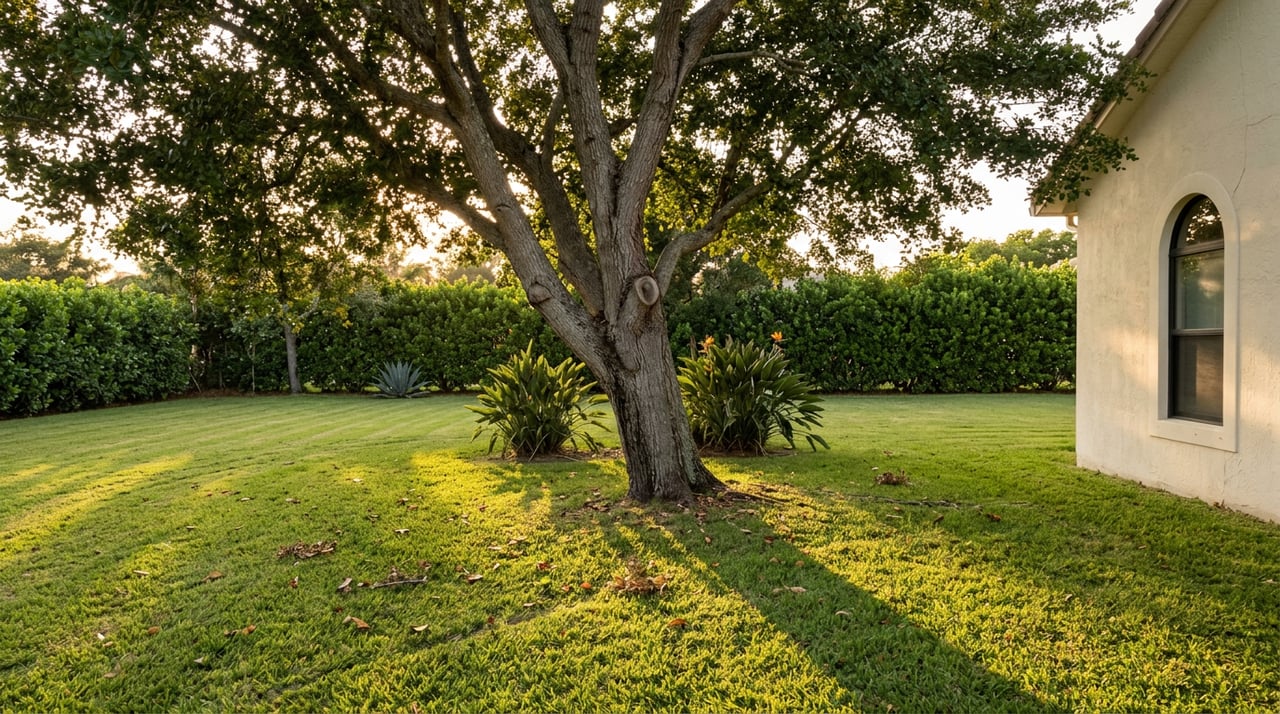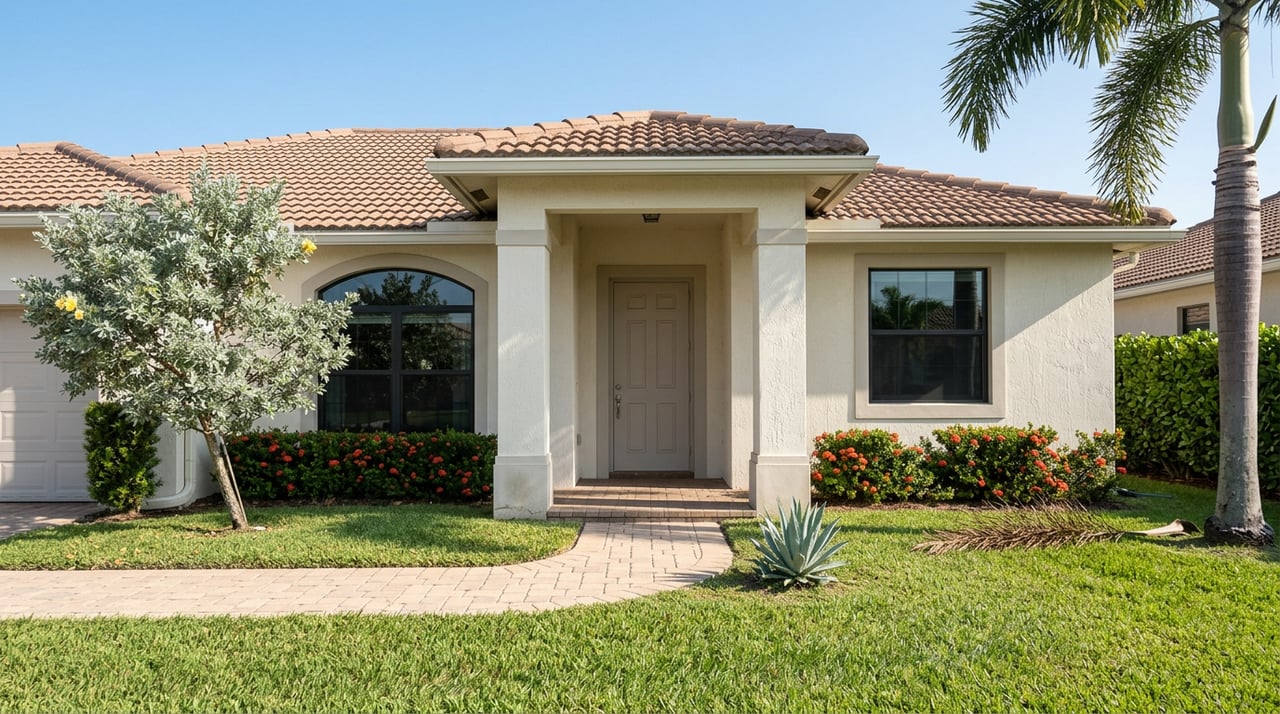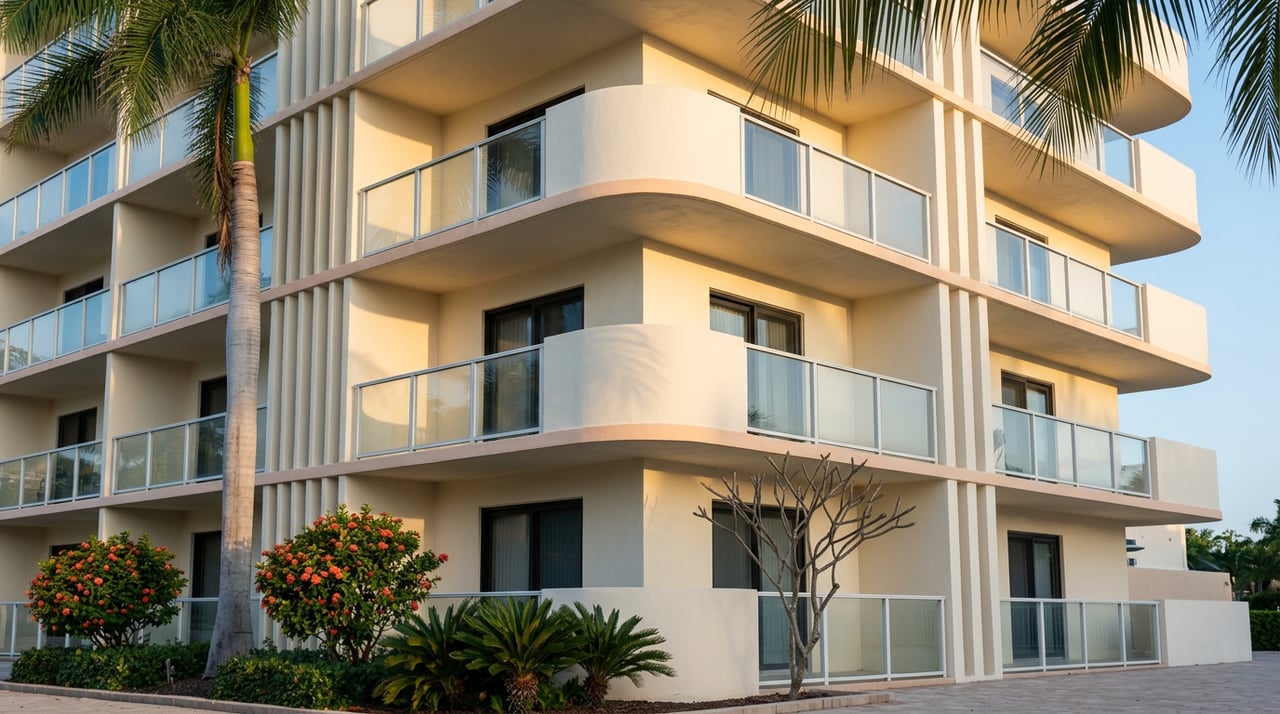
Picture two Kendall properties on the same showing day. The first is a two-story townhouse in Dadeland Walk, built in 1980 and 1981, tucked behind a gate a few minutes from Dadeland Mall. The second is a unit at The Grande, an eight-story tower on the lush avenues near downtown Kendall, completed in 2003. A buyer comparing the two might assume the older property carries more structural risk simply because it has more decades on the clock. Under Florida's current condo law, that assumption runs backward. The 45-year-old townhouse has no state-mandated reserve obligation at all. The 23-year-old tower already had to file a structural reserve study with the state.
That's the piece of this market that doesn't show up on a listing sheet, and it's the reason Kendall condo shoppers need a different mental model than the one built from Miami Beach and Brickell headlines.
Age isn't the trigger. Height is.
Florida's post-Surfside reforms created two separate clocks for condominium buildings, and conflating them is where most confusion starts.
The Milestone Inspection is age-triggered. State law sets the first inspection at 30 years, with local building departments authorized to move that up to 25 years based on local conditions. Miami-Dade County's own recertification program now lists 25 years as the first-inspection age for condominium buildings generally, aligned with the state statute, rather than reserving that earlier clock only for buildings near the coast. That means Kendall's inland towers are on the same 25-year schedule as buildings a mile from Biscayne Bay, even though they're nowhere near saltwater.
The Structural Integrity Reserve Study, or SIRS, runs on a completely different clock. It applies to any residential condominium or cooperative building three or more habitable stories tall, full stop. Age doesn't factor into whether a SIRS is required. A building finished last year still needs one on file. For existing owner-controlled associations, the SIRS had to be completed by December 31, 2025. Starting January 1, 2026, those associations can no longer vote to waive or underfund reserves for the eight structural components the study covers: roof, load-bearing structure, fireproofing and fire protection, plumbing, electrical systems, waterproofing, windows and exterior doors, and any additional item over the state's inflation-adjusted threshold, set at $25,675 for 2026.
Dadeland Walk's townhomes are one and two stories. They fall outside both requirements entirely, regardless of how many decades they accumulate. The Grande, at eight stories, was required to have a completed SIRS on file by the end of last year, whether the building was 5 years old or 50.
What Kendall's actual towers look like on paper
Here's how the neighborhood's better-known Dadeland-area condo buildings line up against those two clocks:
| Building | Year built | Height | Units | Approx. age in 2026 | Local 25-year recertification due | SIRS status |
|---|---|---|---|---|---|---|
| The Grande | 2003 | 8 stories | 71 | 23 years | 2028 | Required by Dec. 31, 2025 |
| Toscano at Dadeland | 2007 | 6 and 27 stories (two towers) | 403 | 19 years | 2032 | Required by Dec. 31, 2025 |
| Colonnade at Dadeland | 2007 to 2008 | 10 stories (two towers) | 297 | 18 to 19 years | 2032 to 2033 | Required by Dec. 31, 2025 |
| Downtown Dadeland | 2006 to 2008 | 6 and 7 stories (seven buildings) | 416 | 18 to 20 years | 2031 to 2033 | Required by Dec. 31, 2025 |
| Dadeland Walk | 1980 to 1981 | 1 and 2 stories | 110 | 45 to 46 years | Not applicable, under 3 stories | Not applicable |
The Grande is the first of these towers to reach its 25-year recertification window, arriving in 2028. Toscano, Colonnade and Downtown Dadeland won't hit that mark until the early 2030s. On the Milestone Inspection timeline alone, every one of Kendall's Dadeland-area high-rises still has years of runway.
The SIRS column tells a different story. All four are already past their deadline for having the study completed and are living under the January 2026 reserve-funding mandate right now.
Why this matters more than a passed inspection
A building that hasn't hit its Milestone Inspection age yet isn't a building with zero financial exposure. The SIRS produces a specific number worth asking for directly: the percent-funded figure for those eight structural components. Industry guidance treats a study showing reserves funded above 70 percent as a low-risk signal, a study in the 30 to 70 percent range as one that likely means measured dues increases ahead, and anything below 30 percent funded as a strong indicator that a special assessment is coming rather than merely possible.
This is the mechanism that actually explains dues movement in buildings like Colonnade at Dadeland or Downtown Dadeland over the next few years. It won't necessarily show up as a single dramatic special-assessment headline the way it has in older coastal towers with decades of deferred maintenance. It's more likely to show up as a board budget line that used to say reserves were waived by owner vote, and now can't say that anymore for the structural categories. The law closed that option as of January 1, 2026. Reserve contributions that were optional for years are now a line item every unit owner funds through their monthly assessment, phased in according to whatever schedule the building's SIRS recommends.
For a buyer comparing a unit at The Grande to something in an older Brickell tower, the headline risk looks lopsided in Kendall's favor. The reserve-funding reality is closer than it appears.
What to actually ask for
Whether you're touring a resale unit at Toscano at Dadeland or comparing HOA dues at Dadeland Walk, the useful question isn't "how old is this building." It's a short list specific to condominiums:
- Has the SIRS been completed, and what percent-funded figure did it produce for the structural components?
- What is the current monthly or annual reserve contribution, and does the board's budget already reflect the SIRS-required schedule?
- Is a special assessment currently in effect, recently passed, or under board discussion?
- When is the building's next Milestone Inspection or county recertification due, and has any prior recertification identified issues?
None of this requires legal training to ask for. It requires knowing which document has the answer, which is exactly where a buyer new to Miami-Dade condo transactions tends to get stuck. The Florida Division of Condominiums, Timeshares and Mobile Homes maintains the state's official guidance on both requirements, including which associations must submit SIRS data and by when, and it's worth reading directly before you're staring at a stack of closing documents with a deadline attached.
The dividing line isn't the calendar
Kendall's Dadeland corridor built most of its condo stock in a five-year window in the mid-2000s, which means the neighborhood's towers are clustered together on the Milestone Inspection timeline in a way that older, more scattered-vintage buildings elsewhere in Miami-Dade aren't. That clustering is itself useful information. It means the first real test of how these buildings hold up under formal structural review will arrive at The Grande around 2028, with the rest following in the early 2030s.
But the reserve funding conversation isn't waiting for that test. It started on January 1 of this year, for every building on that list regardless of how new the paint looks in the lobby. The next time you're comparing a townhouse in Dadeland Walk to a tower a few blocks over, the certificate of occupancy date on the tower matters less than a number that's already sitting in a filing at the state's Division of Condominiums. Ask for it before you ask about the view.
Buying or selling in Kendall's condo corridor and want a second set of eyes on what a building's reserve documents actually say? Phillip Delgado has spent 25 years working Kendall and Dadeland transactions and can walk you through what to request before you're under contract. Let's talk about your next move.